Speaking with Naomi Shihab Nye
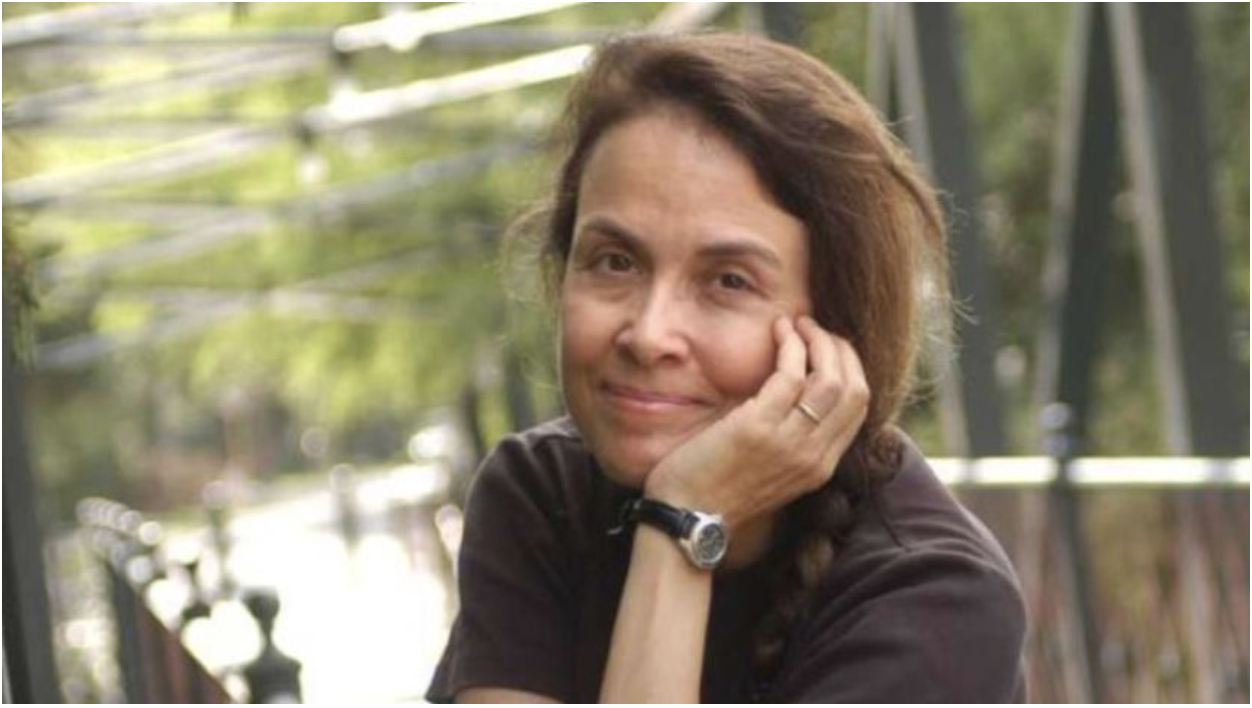
Source: The Los Angeles Times
Note: This article was originally written for the January 2020 edition of the Beachside Press.
By Antara Singh-Ghai '22
This November, Naomi Shihab Nye came to visit Greens Farms Academy. Ms. Nye is a famous American poet who has written several books since her debut in the 1980s. In addition, she is the first Arab-American to become the Young People's Poet Laureate. After an introduction by three sophomores to the upper school, Ms. Nye read some of her poetry. Afterwards, she spent two days in multiple classes with GFA students. In those classes, she helped students become better writers and talked about her love of poetry.
Aside from spending time in classes, Ms. Nye also met with members of The Beachside Press and Penumbra to talk about her poetry and global affairs. Here are some excerpts of her time with Beachside:
Q: Your dad's Palestinian, so you know a lot about and feel very connected to Palestinian culture in many ways. What's your take on the current situation in Israeli politics, especially regarding Benjamin Netanyahu?
A: Well, I think it's grievous what's happened in the last few years. There's been even further oppression of Palestinian people enabled and embodied by activities in Isreal-Palestine.
I think it's sorrowful. I think it's very sad. The Palestinians, from the beginning, have always had an unequal operating base. Israelis have had so much money, weapons, international support –or American support–being poured into their perspective. I think it's ridiculous to try to separate the people at this point because there are so many Arabs in Israel and so many illegal settlements in the West Bank and Arab areas. The people are all mixed where they are! But continuing to this day, there are all kinds of apartheid maneuvers that are difficult for Palestinian people to survive.
And it's not just me saying this: at the beginning of one of my books, I quote Jewish soldiers talking about the apartheid movement. There are lots of people, including Jewish people, from across the world saying the same thing.
I'm very devoted to more equanimity in the region, but it hasn't been going in a good direction. It's become more powerful on one side and more oppressed on the other. But there's no reason for it to continue that way.
My recent book, The Tiny Journalist, focuses on these kinds of Palestinian-Israeli issues, especially these kinds of inequalities. It says all I may ever be able to say about the situation. One of the things it expresses much more openly: it's been a system of inequality from the beginning.
Q: Do you think the situation can improve?
I, as a Palestinian-American, remain devoted to a day where Arab people and Jewish people do reidentify as brothers and sisters and share all their talents, resources, and goodness. It would be quite possible, and it would never be too late. The title of my next book –– which is a collection of poems –– is Everything Comes Next, but the full line is from a poem called "Jerusalem": "It's late, but everything comes next." I genuinely think it's the only way to process the current situation. The bad stories can become better stories.
Q: What's your opinion on the situation in Jerusalem?
I don't think Jerusalem must be a capital city in terms of politics: it's a world religious center for three major world religions. That should be enough burden for one city to bear–or glory– whichever way you want to look at it. The ideas about politicizing Jerusalem, the sacred city, and doing that with a kind of underhanded way of: "Okay Palestinians, you don't get anything, You can't have any sense of claim over Jerusalem." I think it's ridiculous, I think it's unrealistic, and I think it's sorrowful. I think Jerusalem will have the last laugh, in some ways. I think that city is going to endure long beyond all the politicians that are alive today. Some day, a wiser sector of humanity will identify that: "this is a sacred city. We shouldn't put any kind of political burden on it."
My father remembered a Jerusalem of more equality when there was kind of a shared cooperativeness. He had many Jewish and Christian friends growing up, although his family was Muslim. He didn't see any reason for things to be sectioned off, like putting people in little boxes away from one another. He thought human beings should be working towards more bridges, greater connections, more cooperation. Just like in a school, where everyone gets the same respect no matter what their background is or family heritage is––hopefully!
Q: What role do you think the US has played in encouraging the current situation in Palestine? What do you think they could do to change it?
Well, they've given a whole lot of weapons to one side. It's like sending two volatile little kids into your backyard and saying "we want you to get along," before giving one of them a lot of weapon toys, and giving the other one nothing. How well does anyone think that will work? It wouldn't work, even with just two people. The one who wasn't given anything would be hurt, and the one who was given all these things might want a way to use them. The US is deeply implicated.
Q: Other than the people of Palestine, what group of internally displaced people or refugees do you empathize with the most?
Well, right now, living in Texas, Mexican-Americans and Central Americans. So many people in our city started out south of us. Texas used to be part of Mexico, so there is such a distortion of history there–like– who said that was yours, who said you could "keep them out"? I have a lot of empathy for people who are living in regions of extreme violence or with a lot of fear, whether they be the Kurds, whether they be the people living in the border regions of Northern Mexico, with terrible drug gangs and violence, whether they be Africans.
Q: Regarding the current situation in Syria: what do you think the US can do to alleviate the situation?
Syria has been a really difficult dilemma to comprehend. One thing that I recall about the time when Assad came into power in Syria was that this particular Assad brother (the other one was killed in a motorcycle incident) didn't even want power! He didn't even want to lead the country! So what happened to him? Does power distort people's souls? I don't know what happened to him to allow him to sacrifice so many beautiful places in his country, like the great city of Aleppo, which is so stricken by destruction now, but was one of the most beautiful places I've ever seen. How has he allowed so many of his people to be sacrificed? The whole thing is a nightmare that I can't even understand.
The Kurdish participation, the Turkish domination in the region: It's very confusing to me. I don't understand. I just think it's a tragedy to have beautiful Syrian cities and people just wanting to have a good life destroyed. Having traveled in Syria extensively in the past, I know what a friendly, loving, sweet, amazing country it was. Just to think of all those people suffering who didn't have any choice in the matter, for issues of power or who's ruling us in Damascus. If there's kind of a huge civil uprising in a country, there's some content there: something's gone very wrong. There's something very wrong under Assad, and there has been for a very long time.
I wish that the United States had clearer support systems that weren't always military in different countries. I always feel that so much money is spent on weapons and military force. What if we were just supporting education? What if we only supported education in Afghanistan and Iraq? No one will die from that; everyone will participate. Or even medicine, or better water systems, or all the things that make human life more beautiful and variable. Let's support those things, and let's refrain from entering into invasions of different countries, like we did in Iraq, which I think was a disaster. It will continue to put our country in this very awkward position of spending so much money on weapons, which ultimately have such disastrous outcomes.
Recently, I've read a lot of interviews with veterans from Afghanistan; I've met a few, and know some, too. That's just been a total disaster. Think about all of the people that died, or the money that was spent, and then the current situation: is it really that much better? Somehow if you get involved in other people's troubles with your weapons and murderous possibilities, maybe that's not always the best thing we can do.
As a world religions major in college, I'm very disturbed by how every single world religion says, "thou shalt not kill." And yet nobody takes it seriously. For me, if you agree not to kill, then you can't have that religion. You've forfeited your claim to any religion. So when you have someone in the American government who identifies as a big religious person and then wants to go to war at the same time, I'm thinking: "you can't have both."
And what would benefit our country more? I want our country to be known as a place of real support, of cooperation, of diversity, of all of the things our country stands for. But does our country want to be known as the kind of heavy-handed weapons dealer in the world?